
A new septic system starts with the township SEO, a sewer-availability check, and soil testing. Those results decide the design. We price and build the approved plan, schedule required inspections, and do not cover work until the SEO allows it. Keep approved drawings and inspection details onsite during construction.
Check sewer availability and call the SEO
Public sewer reaches Lancaster city and many borough or growth-area streets. A new on-lot permit may be unavailable where connection is required or service is reasonably available. Confirm sewer status with the municipality before buying design work or assuming a rural mailing address allows septic.
If on-lot service is appropriate, obtain the municipal application and SEO contact. DEP maintains statewide standards and local-agency structure, but the township sets its fee schedule, submission process, and inspection coordination.
Soil testing decides the design
Test pits expose soil horizons, limiting zones, and signs of seasonal groundwater. Percolation or another approved evaluation helps determine loading and absorption layout. Carbonate bedrock, shallow rock, groundwater, slope, and slowly accepting soils can change the design. A bedroom count commonly establishes residential design flow and tank capacity.
A conventional gravity field suits only sites that meet its criteria. Elevated sand mounds, pressure distribution, dosing tanks, drip or other alternatives introduce mechanical components and maintenance needs. Choose from designs the site can support rather than forcing a preferred system onto unsuitable ground.
Protect the replacement area
Many Lancaster municipal ordinances and planning practices preserve a second absorption location for future use. Keep it free from buildings, paving, pools, grading, and vehicle compaction. Mark both active and reserve areas on plans delivered to the owner. A future buyer cannot protect a field that disappeared from the property file.
- Confirm easements, wells, property lines, streams, and required setbacks.
- Route roof, driveway, and foundation drainage away from treatment areas.
- Plan truck and service access to tanks, filters, and mechanical equipment.
- Provide alarms and accessible controls where pumps are part of the design.
We build the approved plan
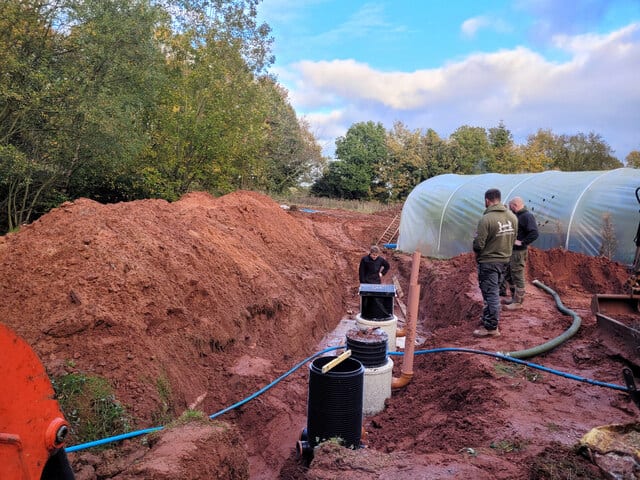
Tank elevations, piping slope, distribution, aggregate or approved media, cover, and grading all affect performance. Required SEO inspections occur at defined stages before concealment. Field changes need approval rather than an undocumented adjustment by the excavator.
The final owner packet should include the permit, as-built location, equipment information, startup or inspection record, maintenance instructions, and township pumping obligations. Alternative systems may require more frequent service than a conventional tank and field.
Before final payment, walk the owner through lids, alarm testing, electrical disconnects, filter access, protected field boundaries, and the emergency contact path. A usable handoff reduces the chance that landscaping or later construction hides critical components.
Price follows the design
Installation prices depend on excavation, system type, imported material, pumps, electrical work, access, engineering, restoration, and municipal fees. Get a written proposal based on the approved design. Eligible Pennsylvania owner-occupants may investigate the PENNVEST/PHFA Homeowner Sewage Program; its loan limits are financing terms, not project prices.
Local rules and service references
Rules and contacts can change. Check the current township record before relying on a deadline or form.