
We pump and clean under-sink grease traps and larger outdoor interceptors for Lancaster food-service properties. Service removes floating grease and settled solids before they take up the unit’s working volume or reach downstream piping. Call with the unit location, capacity, last service date, kitchen hours, and required access window.
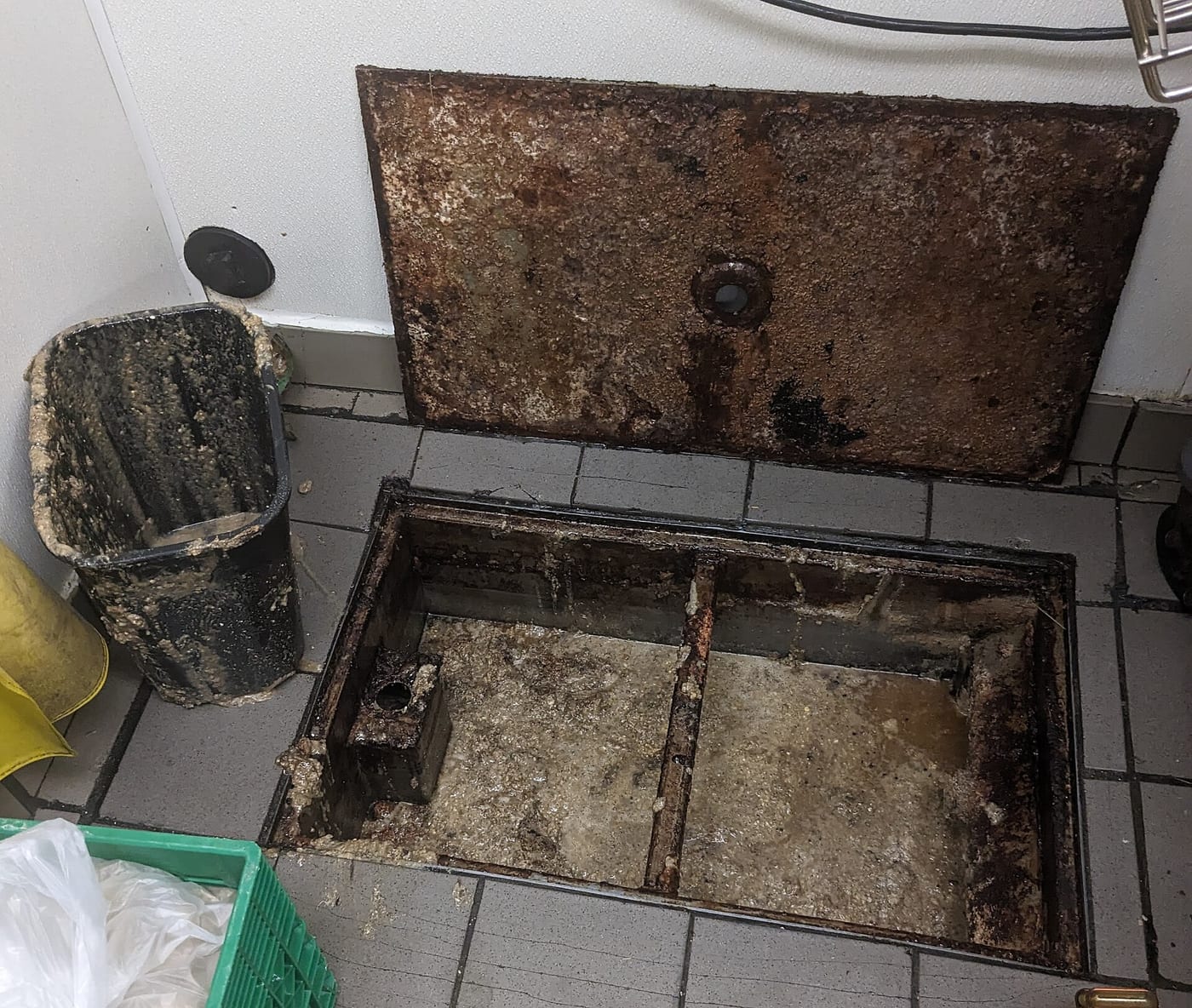
Set the schedule from the grease level
Calendar frequency alone is a weak control when kitchen volume changes. Record grease and solids thickness at each visit, compare it with usable capacity, and adjust the interval before carryover reaches downstream piping. Menu, operating hours, dishwashing practices, interceptor volume, and temperature all change loading.
The City of Lancaster operates a fats, oils, and grease program for food-service establishments connected to its wastewater system. Businesses outside the city may answer to another authority. Confirm the serving utility and its current records rather than applying a city form countywide.
What grease interceptor service includes
Open each required access safely, remove floating grease and settled material, reach included chambers, observe baffles and tees, and restore liquid only as the operating procedure allows. Scraping reachable walls can reveal condition; merely skimming the top leaves the solids that reduce capacity from below.
- Identify indoor trap versus outdoor gravity interceptor.
- State each chamber included and any inaccessible compartment.
- Check lids, seals, baffles, tees, and signs that flow is bypassing the working volume.
- Document volume removed and lawful receiving destination.
Kitchen practices extend useful capacity
Dry-wipe cookware, scrape plates into solid waste, keep fryer oil in a dedicated recycling stream, and use sink strainers. Hot water and emulsifying chemicals can push grease downstream rather than eliminate it. A biological or chemical product does not replace removal when the interceptor contains accumulated material.
Train staff to report slow drains, odors, loose covers, or unexpected level changes. Waiting for a floor-drain backup turns scheduled waste work into a sanitation interruption during service hours.
Coordinate access without contaminating the kitchen
Outdoor lids may sit in traffic areas and need safe work-zone control. Indoor units require protection of food and clean surfaces. Schedule around deliveries and peak meal periods, identify hose routes, and keep customers away from open access. The provider should close and secure every lid before leaving.
Ask whether jetting or line clearing is included; pumping an interceptor does not automatically remove a hardened downstream blockage. Separate tasks make the invoice and maintenance history more useful.
Compare the observed condition with the prior ticket. A repeat loose baffle, damaged lid, unexplained high level, or rapid accumulation should trigger a corrective discussion instead of becoming a permanent note on every invoice.
Photograph deficiencies when site policy permits, label the affected access, and give the kitchen manager a copy before the work zone reopens.
We quote the actual interceptor
Unit size, access, number of chambers, material condition, parking control, hose distance, and frequency set the grease-service price. Require a written quote and avoid an emergency call by setting the next interval from measured accumulation.
Local rules and service references
Rules and contacts can change. Check the current township record before relying on a deadline or form.